
From one quote to a finished, paid job.
Field Logic is quoting and job management for trade and field-service businesses, configured around your rates, materials, margins and methods.
Your business already works. Field Logic helps everyone work the same way.
“Quoting that took me over an hour now takes about 10 minutes.”
Tim Goodlet, Goodlet Rural
Watch a job go all the way through.
Fifty-three seconds. A quote built on site, signed by the customer, varied on the job, invoiced and marked paid.
Sarah talks you through it, and the screens carry the story on their own if the sound is off.
Create the quote once. Everything else is already there.
As soon as the quote is built, the materials list, labour hours, machine hours and payment structure exist. Acceptance, job tracking, variations and invoicing all flow from the same record. You only add information when something changes.
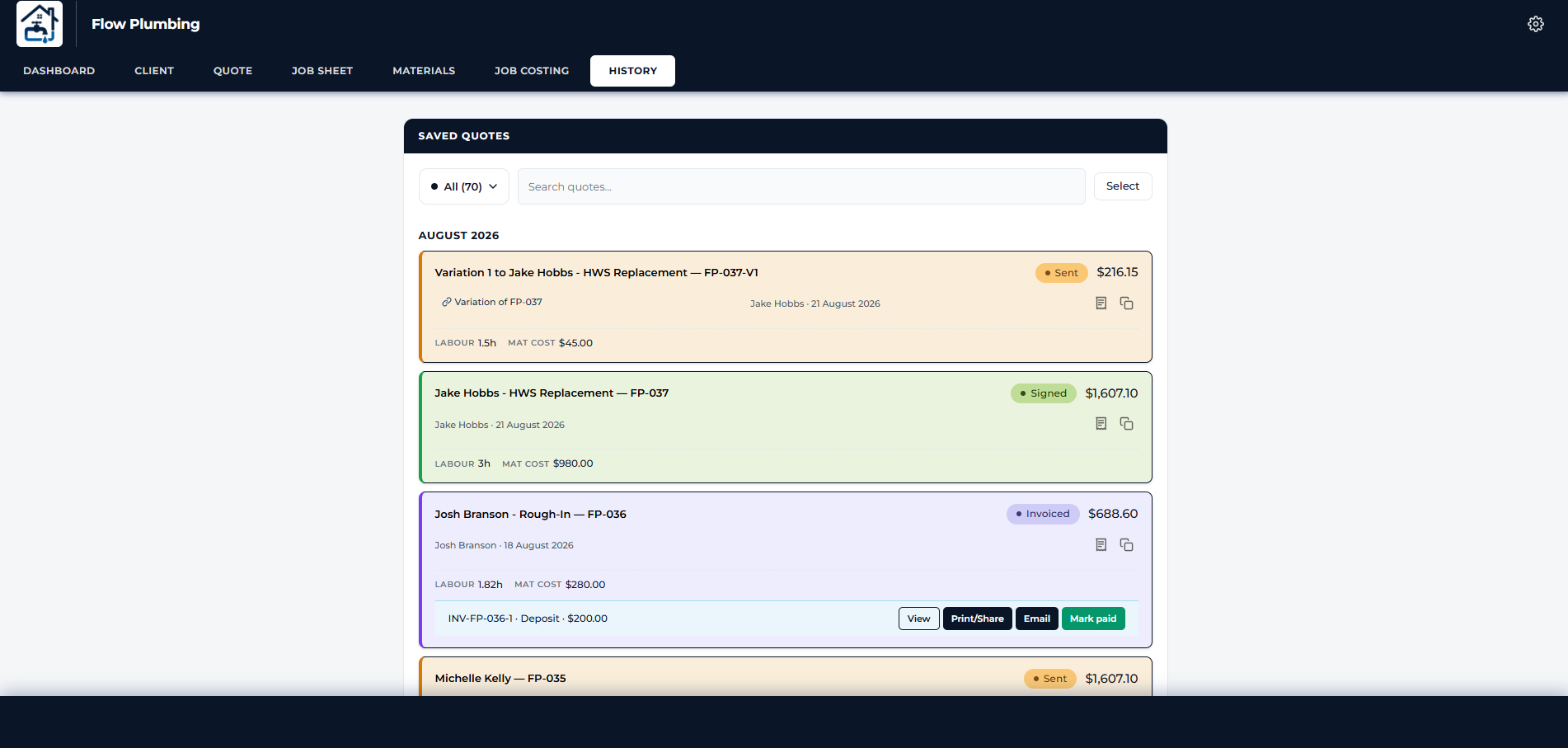
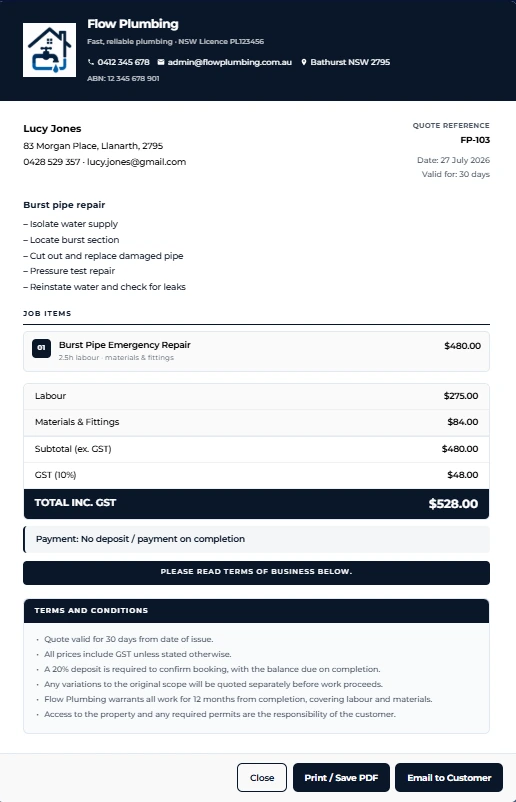
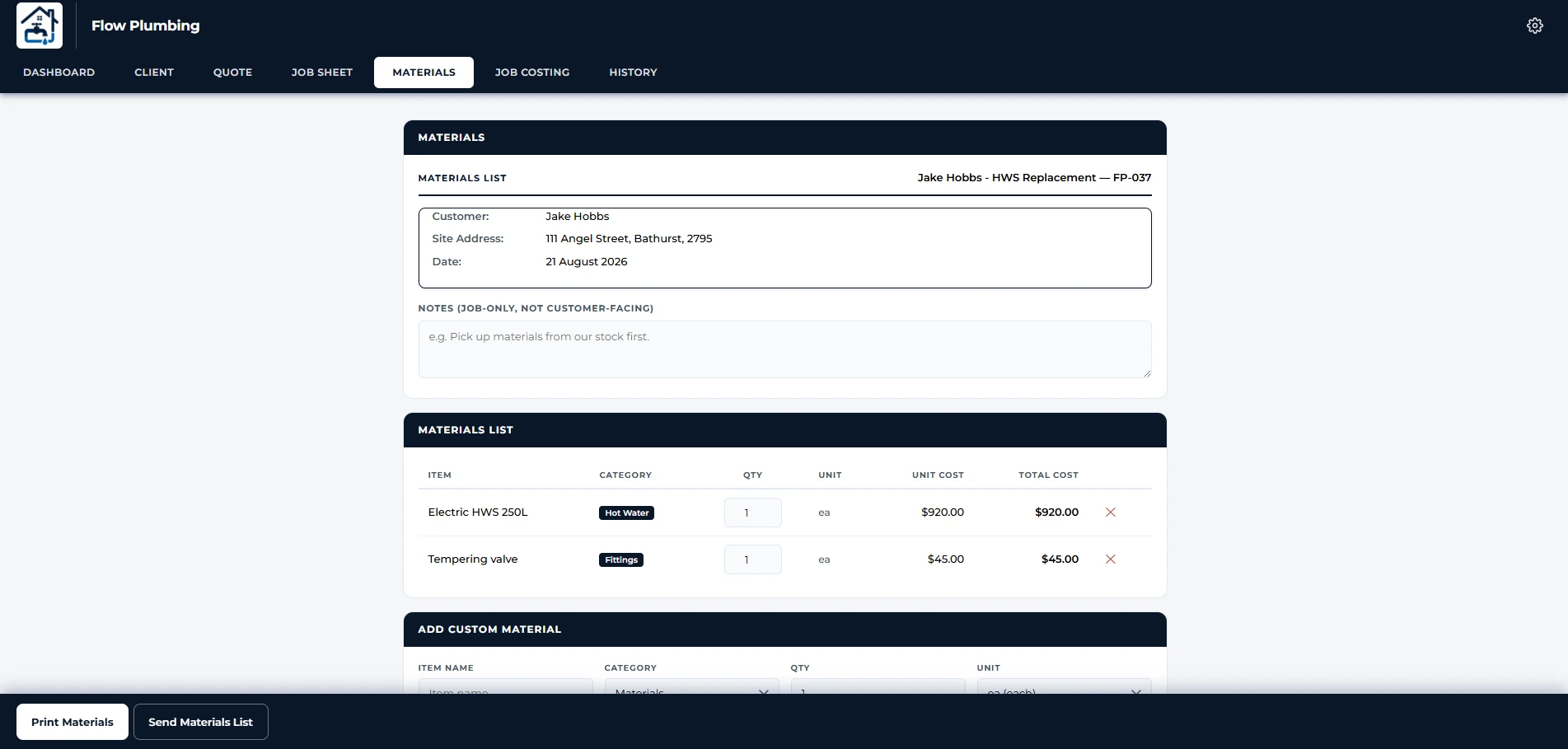
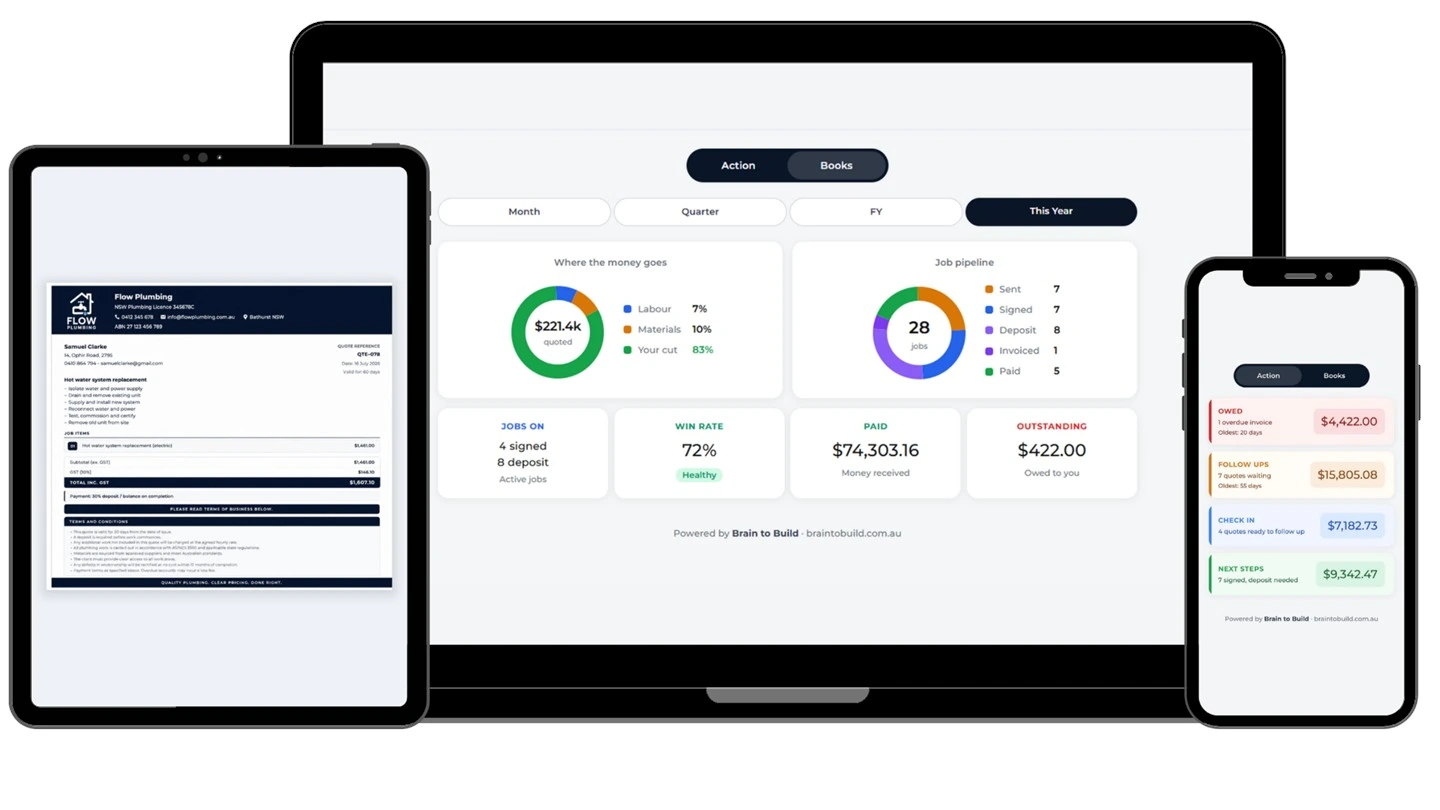
One record. Pick any view.
One accepted quote, through the business
The exact steps are configured around the way your business already operates.
The whole business
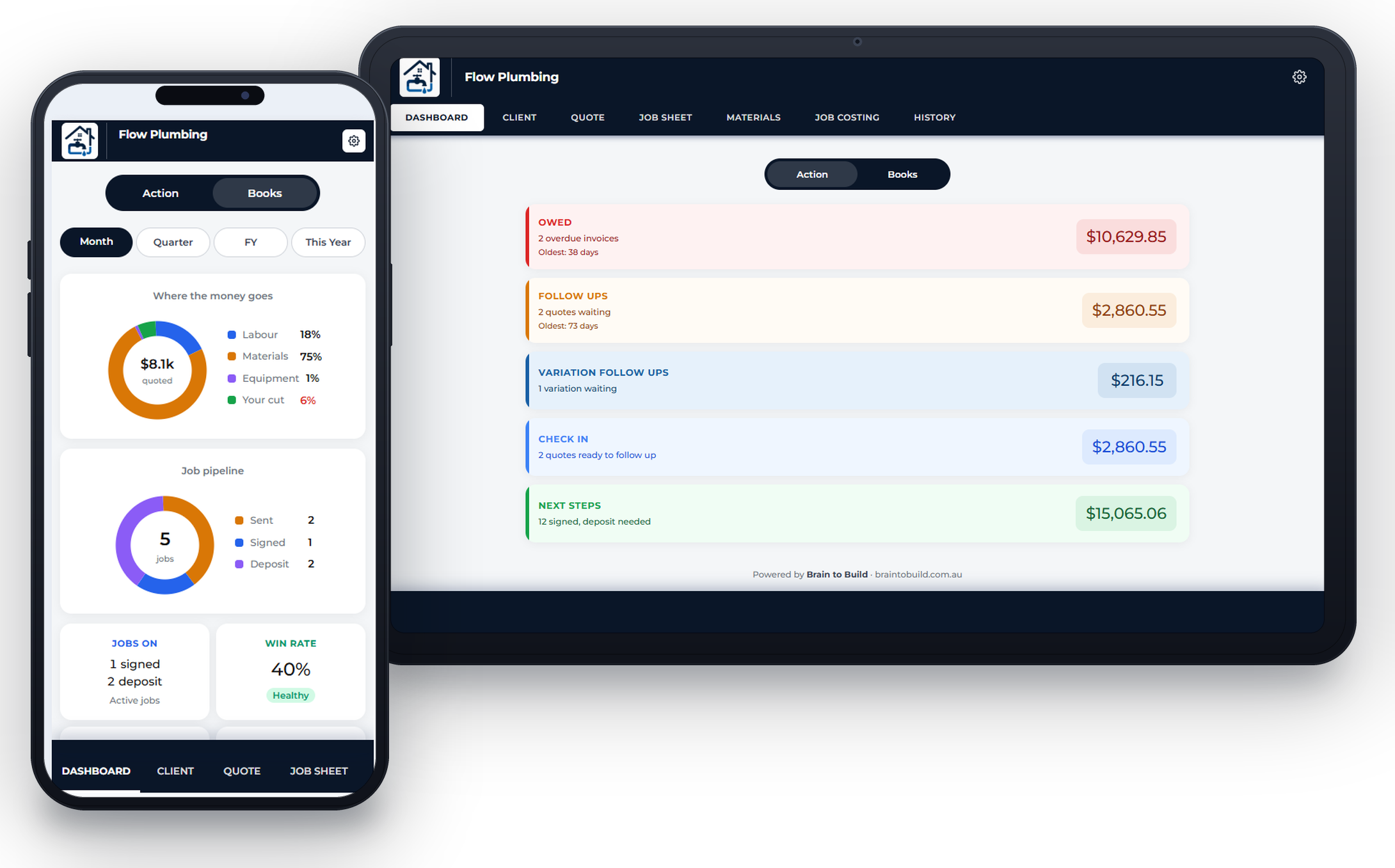
See what is waiting, what is owed and what comes next.
Field Logic shows where every job sits: quoted, accepted, awaiting deposit, active, invoiced or paid.
Each stage has a number beside it, making the next action visible without opening every job individually.
The dashboard draws its information from the jobs themselves. It shows labour, materials and your share across a month, quarter, financial year or full year, along with jobs in progress, win rate, money received and money still outstanding.
Quoting
Your pricing, built in.
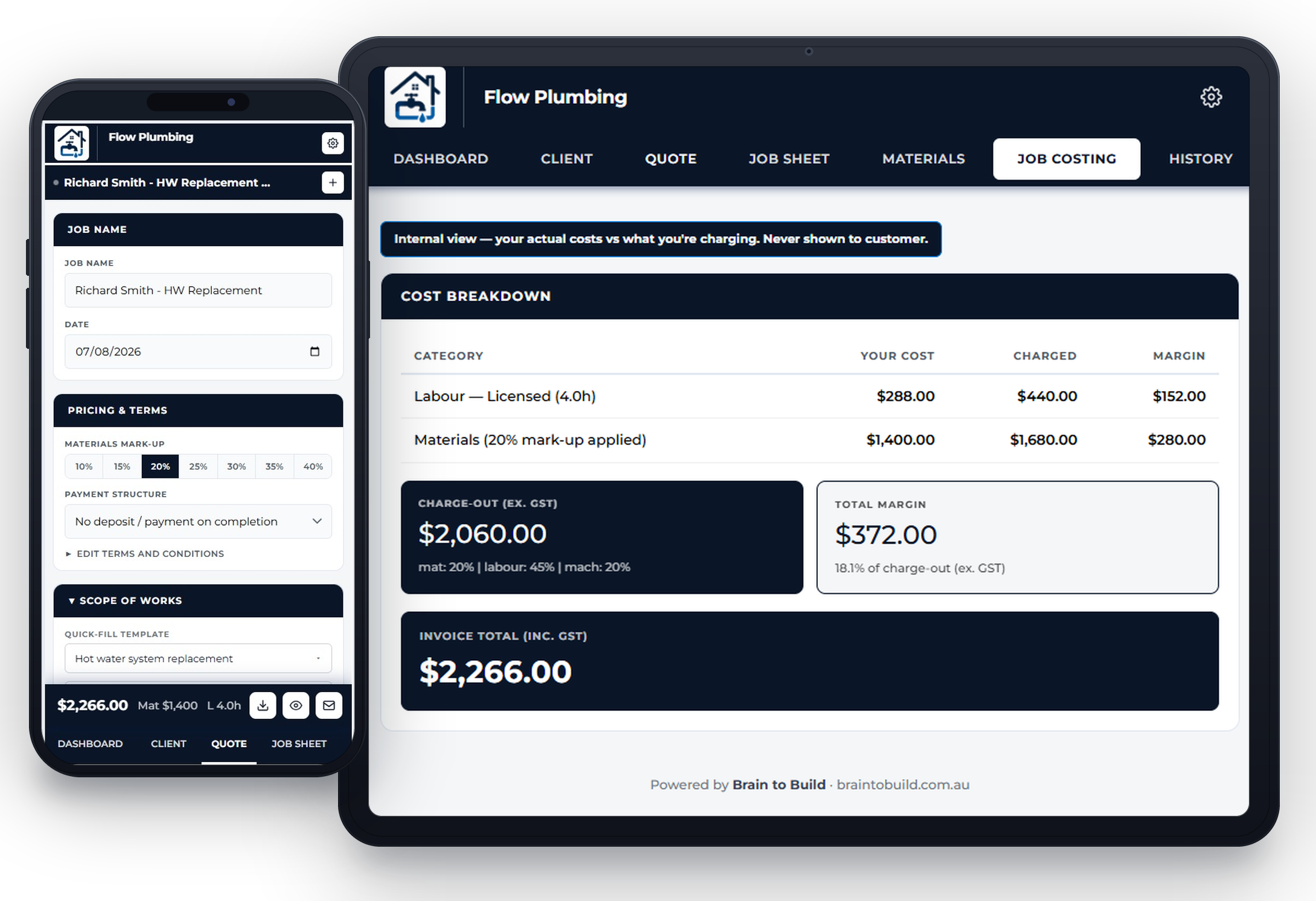
Your rates, materials, labour and mark-ups are configured once.
Build the scope and see the quote total update as you go.
See the charge-out price and margin before the quote is sent.
Acceptance
Signed on the spot, on any device.
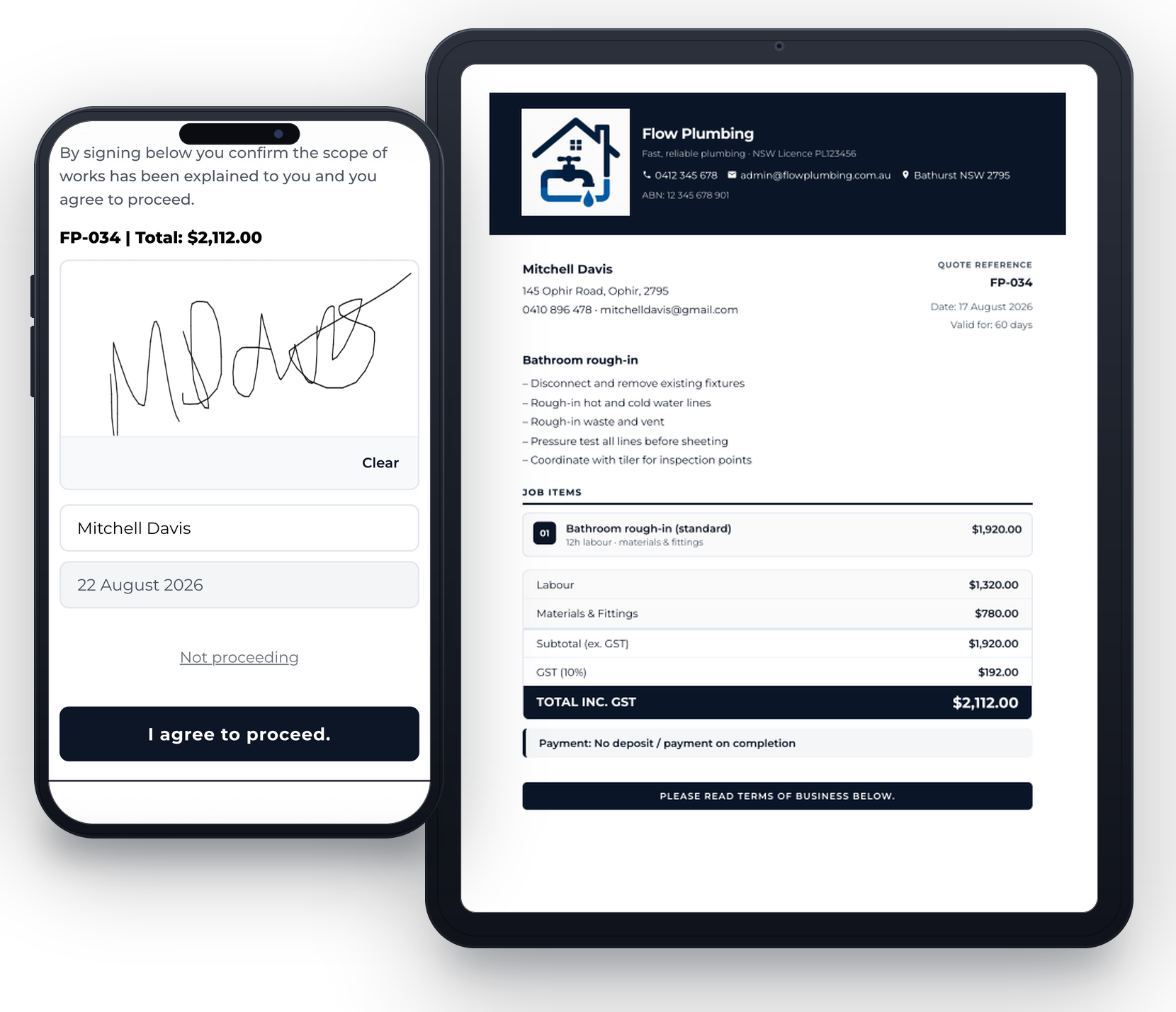
The quote is sent as a finished document carrying your branding, scope, totals and terms.
The customer can accept the quote where they are standing.
Whatever they open it on, the acceptance and deposit position are recorded against the job. You control how much detail the customer sees.
The job
The quote becomes the job.
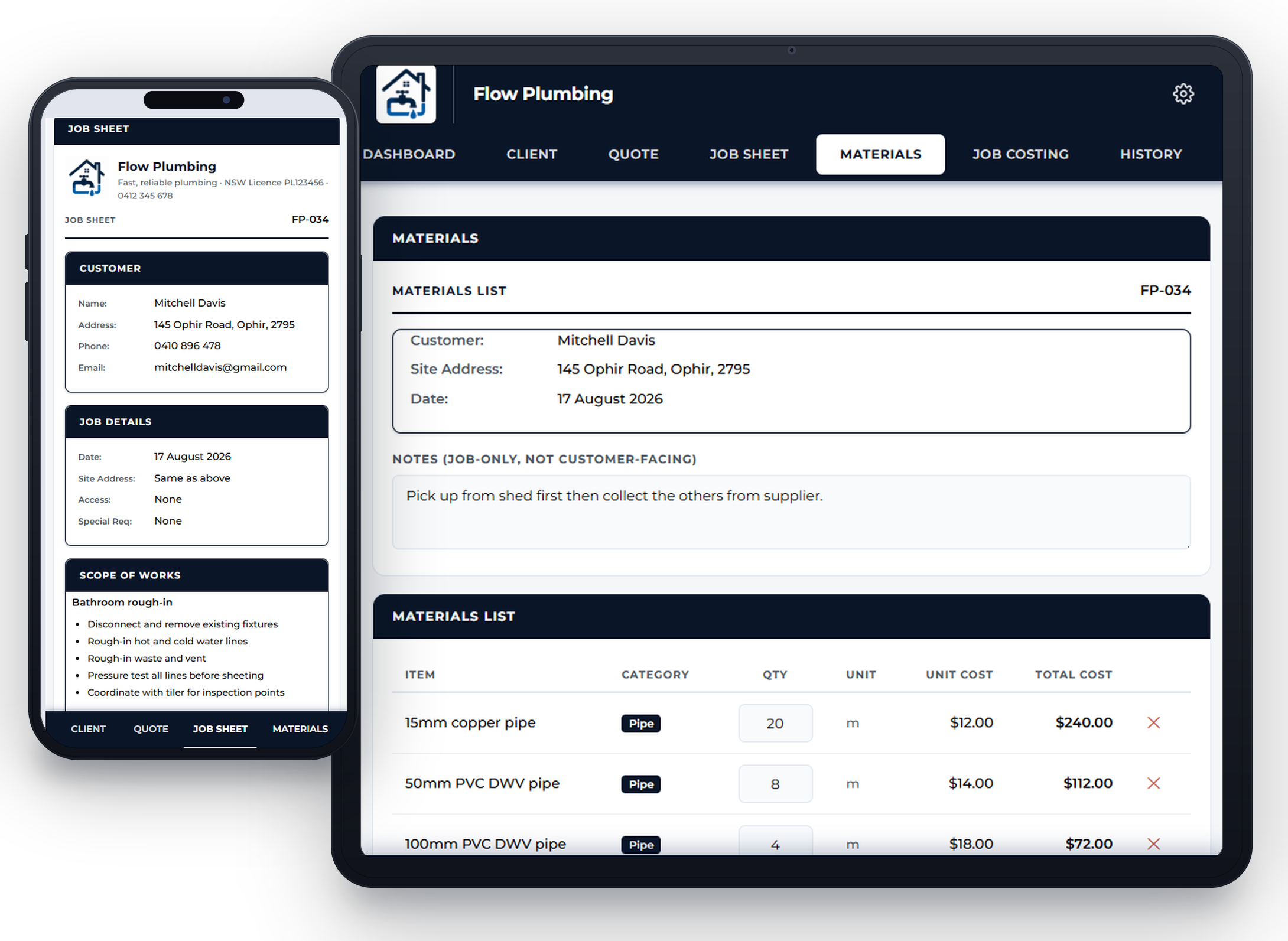
Once accepted, the scope, site details and materials move straight into the job.
Nothing needs to be entered twice.
The job sheet and materials list are created from the approved quote, so the team works from the same information that was priced.
On the job
Extra work is recorded, not absorbed.
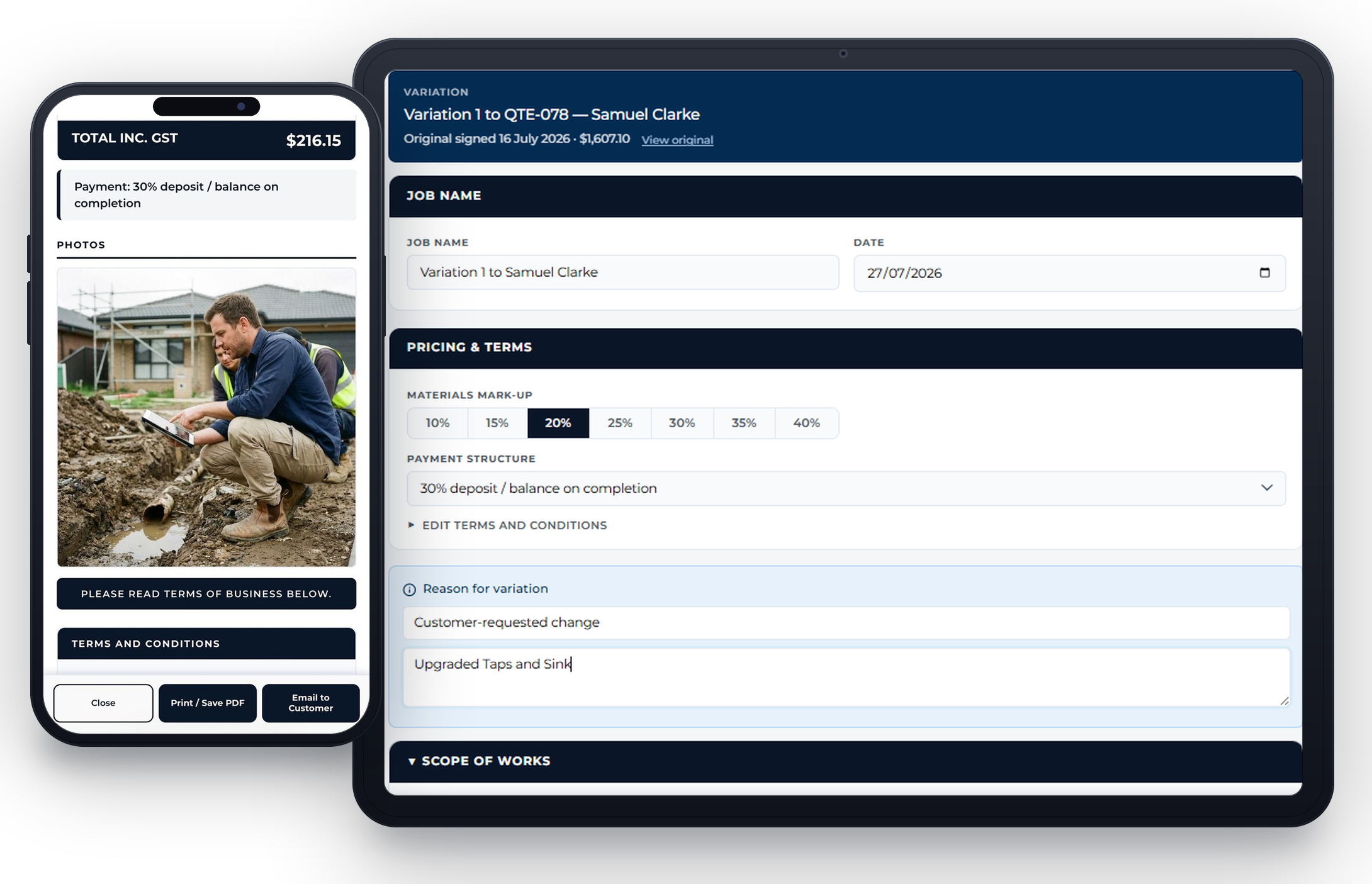
Variations remain linked to the original job, with their own reason, amount and status.
What changed, why it changed and what it costs are recorded before the conversation about payment.
Photos taken on site attach to the job and can travel with the quote or variation.
Invoicing and history
The whole job stays together.
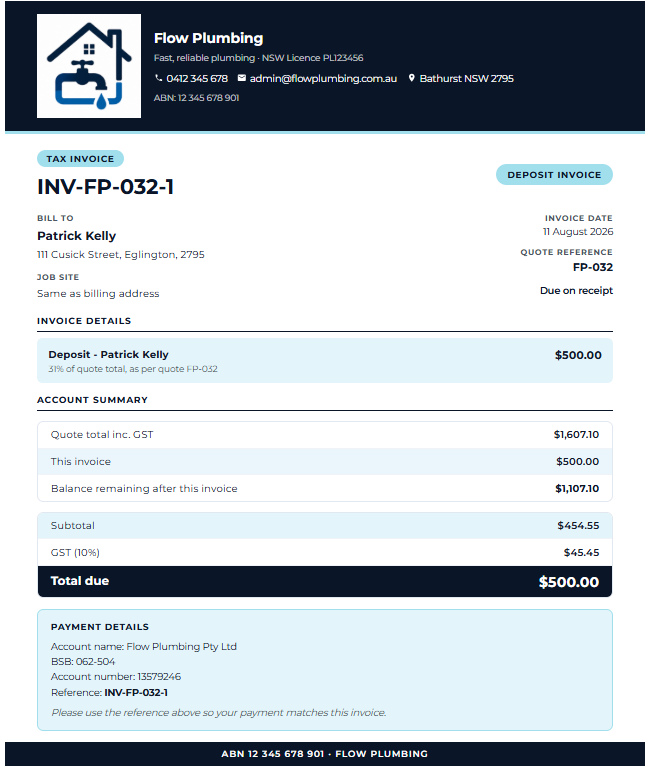
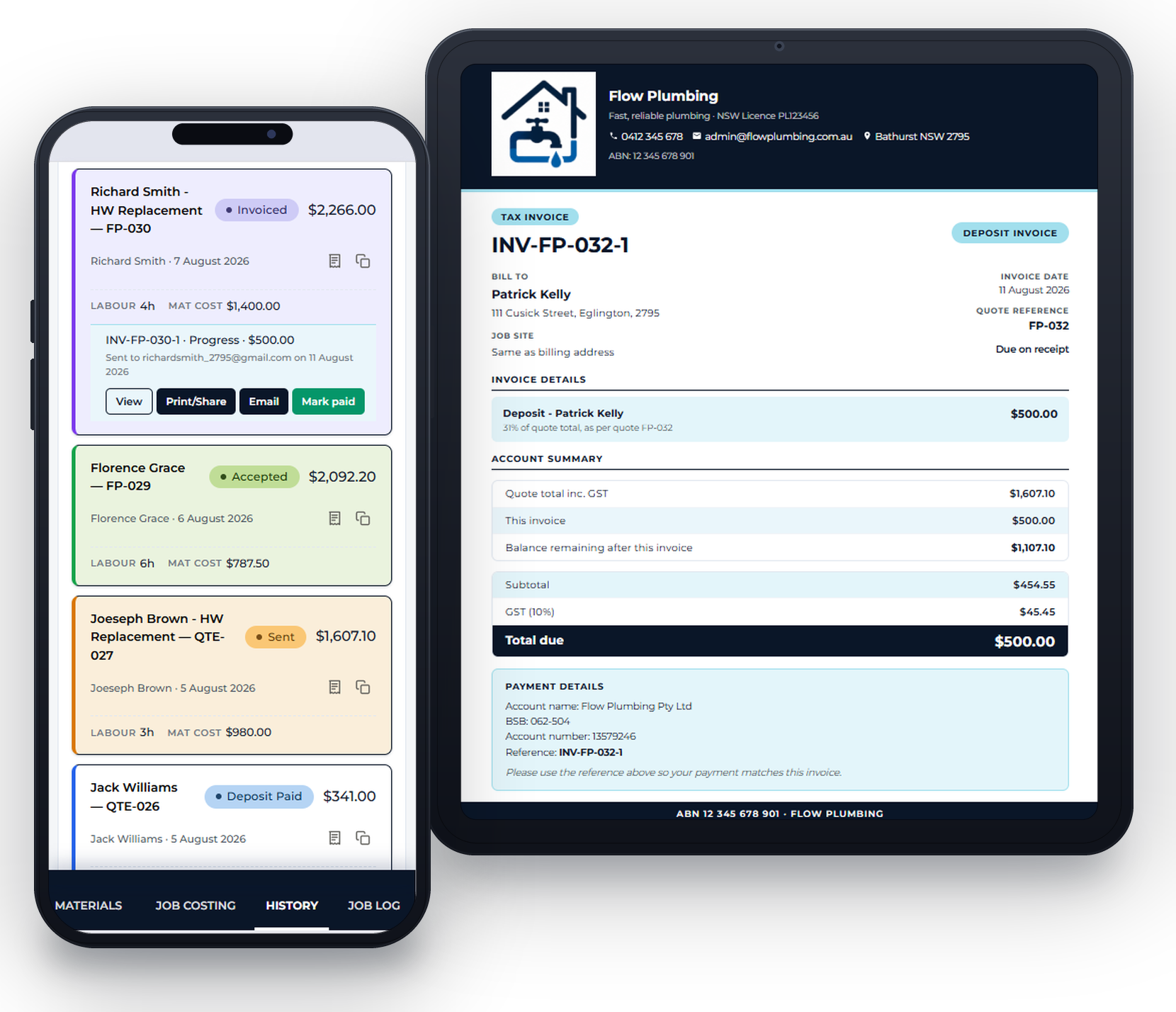
Invoices are raised from the job they belong to (deposit or final) with the relevant quote reference, payment position and remaining balance.
The complete history stays visible: quoted, accepted, varied, invoiced, part paid, paid or declined.
When everything still comes back to the owner.

The knowledge that keeps the business moving often sits with the owner. That works until the business needs to grow, or hand work over. It also works until you want an evening that doesn’t end in paperwork, or a proper holiday.
Field Logic captures that knowledge so more of the team can work the same way.
Most tools ask a business to change how it works. Field Logic is configured around the way the business already prices, quotes and runs jobs.
The business came first. This is what followed.
Field Logic has been a game changer. It saves me time and gives me consistency in my quotes, which gives me confidence that I’m not under-quoting or over-quoting jobs. It calculates margins, costs, labour hours and materials, produces an order sheet and generates a finished quote with my logo and branding, ready to send to the customer.
What used to take me over an hour now takes about 10 minutes. I couldn’t be running my business at the level I’m currently running it at without Field Logic.
Configured and priced for each business.
Field Logic is built around the way you already work, so the price depends on what has to be set up.
The scope, cost and deliverables are agreed in writing before any work begins. The demo comes first and costs nothing.
- How you quote: your methods, templates and terms
- Your rates, materials and pricing structure
- The way work moves through your business
- How many people will use it
See Field Logic using your kind of work.
A demo is the clearest way to understand whether Field Logic fits your business. Sarah will show you how quoting and job management could work using the kind of jobs you actually do.

Sarah Kissane · Founder
Field Logic started by solving a quoting problem inside a real rural contracting business, and became a product because the same need keeps coming up.